Stay Informed
"*" indicates required fields
Blog
If Public School Enrollment is Declining, Why is Spending Increasing?
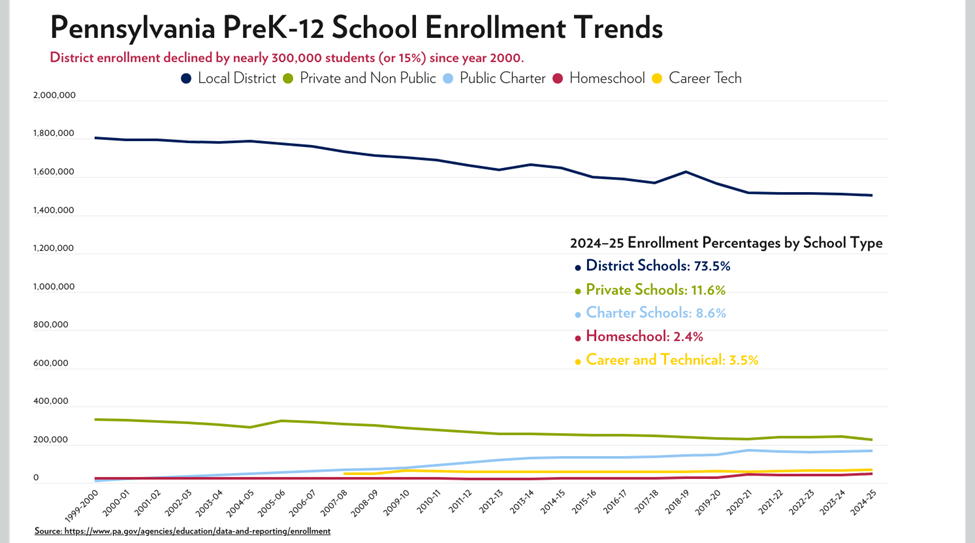
Since 2000, Pennsylvania public school district enrollment has declined by nearly 300,000 students, a 15 percent decline. According to Gov. Josh Shapiro’s annual budget address, today’s kindergarten classes are 26 percent smaller than the current class of high school seniors.
Yet, Pennsylvania is spending more than ever on public education: $23,061 per student. Also, the governor has called for an additional $923 million in K–12 funding, bringing Pennsylvania’s total education spending to $18.7 billion for the 2026–27 school year.
The Rise of Educational Alternatives
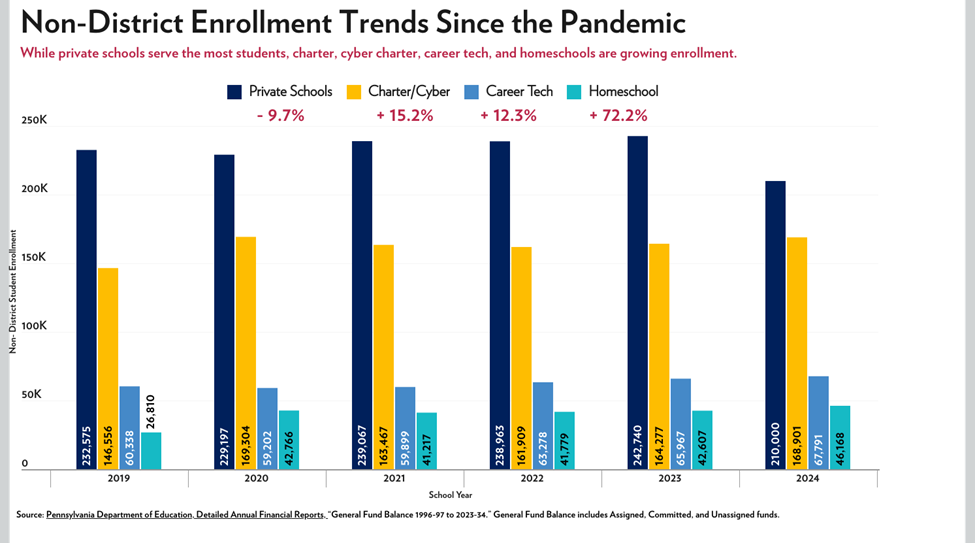
Despite shrinking enrollment at district schools, enrollment in other sectors has grown since the COVID-19 pandemic:
- Public charter and cyber charter enrollment increased by 15 percent.
- Career and technical schools by 12 percent.
- Home schooling grew by a whopping 72 percent since 2019!
Despite this growth, Shapiro has ignored the growing demand for expanding school choice. For two consecutive years, the governor has signed budgets that cut funding to public cyber charter students. Also, his new budget proposes “redirecting” $250 million away from cyber students, who are more likely to be low-income, homeless, and economically disadvantaged.
More Money, Worse Outcomes
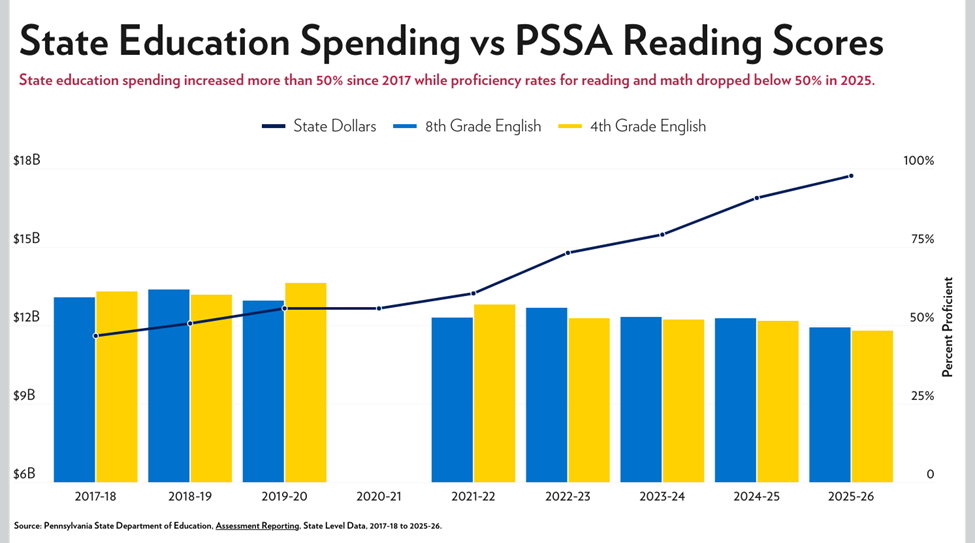
Increased spending has not improved academic outcomes. State education spending increased by more than 50 percent since 2017, while proficiency rates for reading and math dropped below 50 percent in 2025.
Gov. Shapiro’s budget is reckless: taking money away from public cyber charter students and increasing education spending despite enrollment and achievement declines. Doubling down on the failed strategy of “throwing money at the problem” hasn’t worked.
More Choice is the Answer
What will work? It’s simple: give Pennsylvania families the choice and resources to afford the schools that are best for their kids.
Shapiro can opt in to the brand-new federal scholarship tax credit, which will provide scholarships to Pennsylvania’s K–12 students, regardless of the school they attend. Public school students can apply for the scholarship through their school district’s Educational Improvement Organization, and non-public school students will apply through their school or via one of Pennsylvania’s established scholarship organizations. This program is free for Pennsylvania because it is funded by private donors who will receive a $1,700 credit against their federal tax liability for their donations.
If Shapiro fails to opt in, Pennsylvania will lose out on millions of dollars in tax revenue for families. Analysis by Education Reform Now suggests that if even 15 percent of Pennsylvania taxpayers with a federal tax liability of greater than $1,700 donate, this program would yield $484 million in the commonwealth.
Empowering parents and students with choice and opportunity remains the best option for educating Pennsylvania kids.
More information available in the following slideshow:
Connect With Us
Email Sign Up
"*" indicates required fields