Stay Informed
"*" indicates required fields
Blog
School Districts Claim to be “Underfunded” During Budget Impasse, Despite Massive Reserve Funds
Winston Churchill famously said, “Never let a good crisis go to waste.” Pennsylvania school districts have adopted this approach, using the current state budget impasse as a pretext to raise taxes or cut their budgets.
Case in point: Pittsburgh Public Schools.
With declining enrollment forcing inevitable school closures, the school district is looking for more money to educate fewer students. Moreover, the district, while awaiting checks from Harrisburg, has floated a proposal to increase the millage rate to 10.66, generating almost $7 million in additional property tax revenue.
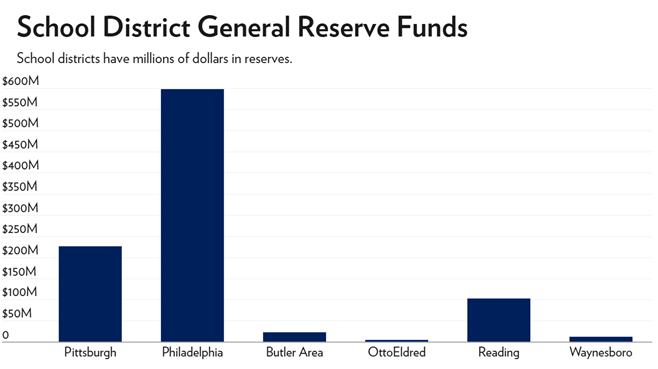
But don’t let them fool you: Pittsburgh schools have money. According to statewide records, the district has more than $226 million in reserve funds—almost 30 percent of its annualized revenue.
Sadly, this trend isn’t limited to Pittsburgh. As the budget stalemate drags on, school districts across the commonwealth have sounded alarms about delayed payments, stalled state aid, and an inability to move forward on key expenses.
But in many cases, these warnings are paired with proposals to raise taxes or impose unpopular austerity measures—even in districts that have unusually large reserve funds:
- The Philadelphia School District borrowed $1.5 billion—not including $30 million in borrowing costs—to cover delayed revenue from Harrisburg. The district claims that it is short $400 million in state payments but has about $600 million in reserves, about 13 percent of its budget.
- Butler Area SD reportedly has $22 million in reserves, equal to about 20 percent of its budget, yet has denied professional development and left positions unfilled. When pressed, the superintendent later admitted, “There is enough tax revenue to get through November/December.”
- Otto-Eldred School District has reserves topping 33 percent, about $4 million. However, the district has publicly complained of feeling squeezed by the funding shortfall.
- Reading School District holds over $100 million in reserve (roughly 25 percent). Yet, the district has delayed hiring 16 reading teachers and 55 paraprofessionals. Reading is frequently cited as “the most underfunded school district in Pennsylvania.”
- Waynesboro Area SD, with reserves of over $12 million (about 16 percent of its budget), claims that delayed grant funding for its 119 kindergarten students means “children are staying home and cannot make up lost time.”
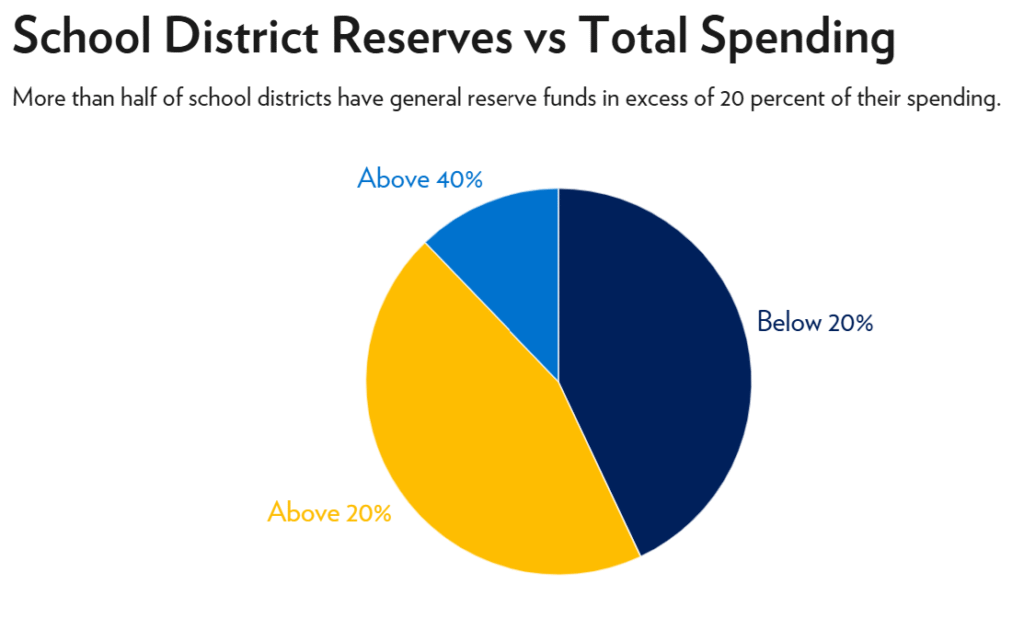
More than 250 Pennsylvania districts hold reserve funds exceeding 20 percent of their spending—the recommended amount by previous auditor generals. Statewide, districts hold more than $7 billion in general fund reserves, almost $5 billion in capital projects, and about $900 million in other reserves—roughly 35 percent of what districts spend in a year.
If these districts are in such dire straits, why aren’t they tapping into their exorbitant savings? Suffice it to say, school districts have sufficient funds to cover the $3 billion shortfall they have recently complained about.
The political dynamic is clear: When the state fails to pass a budget, districts can point to “lack of state support” as the reason for raising taxes, making hard choices, and deflecting blame from local governance.
Yet, such circumstances are why districts maintain reserves in the first place. Reserves are for emergencies; they are not intended to be a long‑term substitute for stable revenue streams. Once revenue starts flowing again from statewide coffers, these districts can then backfill the savings they spent during the interim.
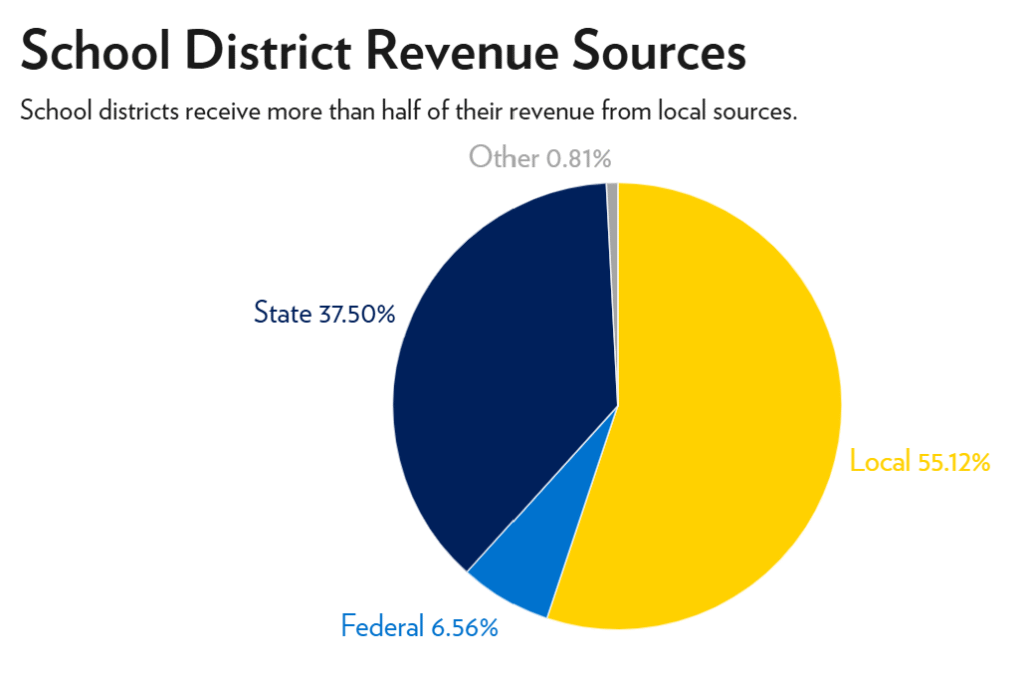
All politics are local. The impulse to “blame Harrisburg” may play well politically. But most school funding—about 56 percent—originates at the local level. Also, blame-shifting won’t improve shrinking enrollment or declining academic performance.
Connect With Us
Email Sign Up
"*" indicates required fields