Media Hit
Pennsylvanians’ Constitutional Rights Don’t End at the Edge of Their Yards
Originally published by and reprinted with permission from the Legal Intelligencer.
Pennsylvania private property owners scored a big win recently.
The state Supreme Court, in Punxsutawney Hunting Club v. Pennsylvania Game Commission, concluded that posted private land deserves protection from warrantless government intrusion. The court overturned long-standing precedent and, in so doing, reaffirmed both Pennsylvania’s historic commitment to property rights and its tradition of affording stronger privacy protections than those under the federal Fourth Amendment.
For years, the Pennsylvania Game Commission relied on a long-standing legal doctrine to send agents onto private land with neither consent nor a warrant. The “open-fields doctrine” empowered state game wardens and officers to traverse private land outside the immediate area surrounding a home, inspect citizens, and set up surveillance equipment without warrant, consent, or probable cause.
This broad definition left far too much private land in the crosshairs of government overreach. One analysis found that 90 percent of private land in Pennsylvania was vulnerable to warrantless searches and surveillance.
The open-fields doctrine leans heavily on a century-old precedent. In 1924, the U.S. Supreme Court ruled that the Fourth Amendment’s protections do not extend to “open fields” beyond a home’s protected curtilage. In 2007, the Pennsylvania Supreme Court reaffirmed this doctrine in Commonwealth v. Russo.
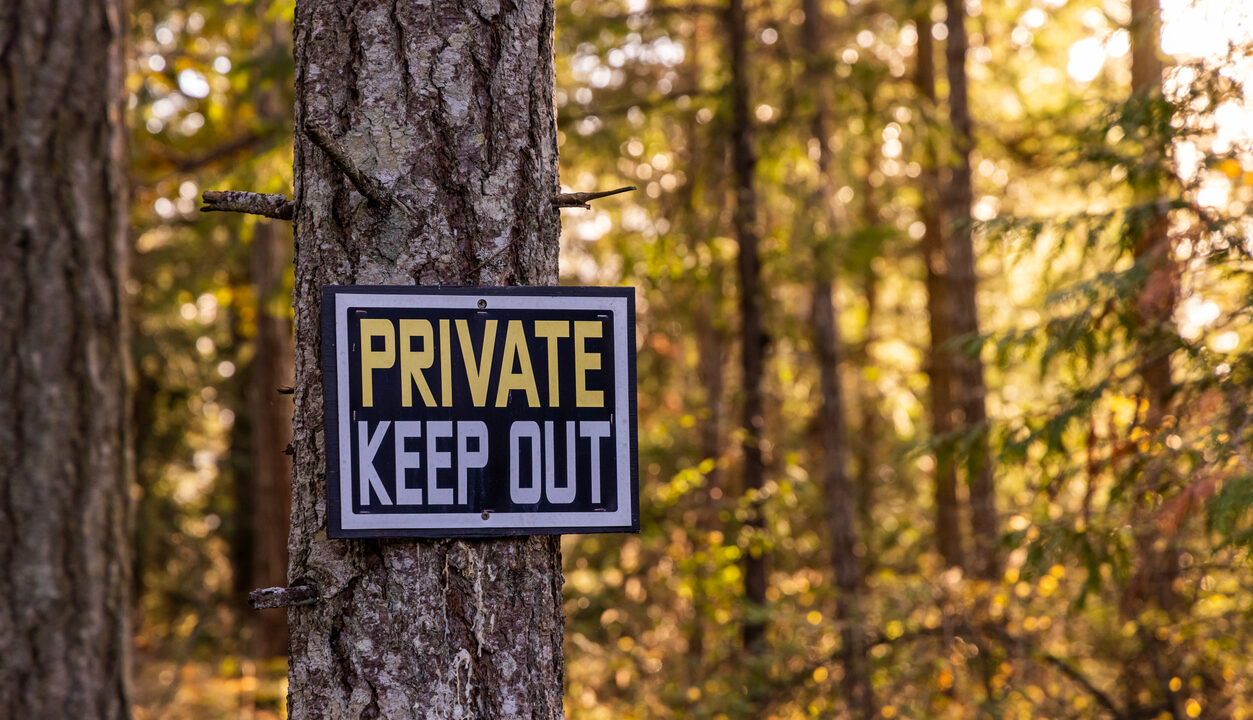
This precedent was challenged by two private, member-owned hunting clubs, the Punxsutawney and Pitch Pine Hunting Clubs. Both plaintiffs manage thousands of acres where their members can stay overnight or vacation for longer periods. To ensure their members’ privacy, the clubs took a variety of measures to exclude non-members from this land, including posting “no trespassing” signs, painting purple paint along the property lines, installing locked gates at all public entrances, and installing fencing in certain areas.
Despite these efforts, Pennsylvania Game Commission officers, as well as the game warden, frequently entered the clubs’ lands looking for evidence of hunting violations. They did so without permission and without a warrant. Tired of these frequent encounters with Game Commission officials, the clubs sued.
The Institute for Justice (IJ), a nationally renowned public-interest law firm, represented the hunting clubs. In support of IJ and the hunting clubs, the Commonwealth Foundation filed an amicus brief, arguing that the open fields doctrine “offends the guaranteed right of privacy embedded [in our state constitution].” Property rights become hollow if the government can ignore “no trespassing” signs in these instances.
The Pennsylvania Supreme Court agreed. In a unanimous ruling, the high court overturned Russo. The court examined the text of Article I, Section 8 of the Pennsylvania Constitution, its history of providing more privacy protections than the Fourth Amendment, case law from other jurisdictions, and relevant policy considerations in reaching its decision.
Justice Kevin Brobson, writing on behalf of the court, declared: “We conclude that slavish adherence to our decision in Russo must give way to the greater privacy and property protections afforded under Article I, Section 8 of our state charter.” He added that the arguments behind Russo “have not aged well.”
The court put a decisive end to this practice, establishing that the Pennsylvania Constitution provides Pennsylvania citizens with “greater protection than the Fourth Amendment … as it relates to the open fields of any landowner that has demonstrated a reasonable expectation of privacy by taking sufficient steps to exclude intruders.”
Moreover, this holding rejects the argument that protecting constitutional rights and protecting wildlife are mutually exclusive. Conservation must be pursued within constitutional limits. Pennsylvanians’ constitutional rights don’t end at the edge of their yards.
Although this ruling directly addresses Pennsylvania statutory law, its impact may extend beyond the commonwealth’s borders. State courts across the country are increasingly re-evaluating their independent constitutional provisions relative to Fourth Amendment jurisprudence. With IJ actively challenging similar open-fields cases in Alabama, Louisiana, and Virginia, Punxsutawney Hunting Club stands as a powerful precedent for property rights litigation nationwide, offering a compelling blueprint and defense against government overreach.
The court affirmed what Pennsylvanians knew all along: The government cannot sidestep constitutional safeguards. Private land does not mean public access, and state government agents must obtain a warrant or satisfy one of the warrant exceptions before stepping onto any privately owned land when the landowner has taken the steps to exclude intruders.
Government may map out property parcels, but the Constitution is what ultimately draws the line.
Megan Martin is chief operating officer and general counsel for the Commonwealth Foundation, Pennsylvania’s free-market think tank.
Reprinted with permission from the August edition of the Legal Intelligencer © 2026 ALM Global Properties, LLC. All rights reserved. Further duplication without permission is prohibited; contact 877-256-2472 or asset-and-logo-licensing@alm.com.