Media Hit
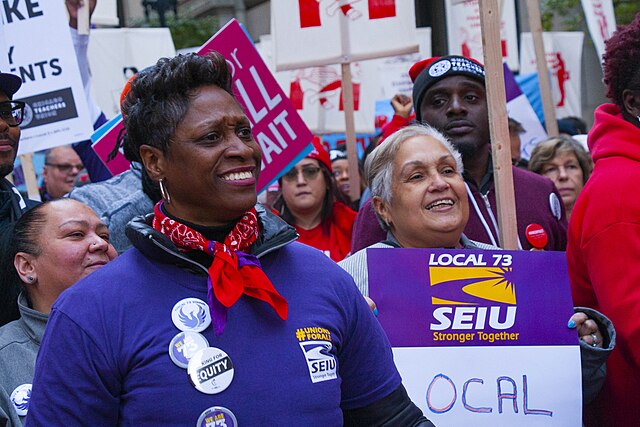
Government Unions Are Making a Comeback—and Taxpayers Will Pay the Price
Originally published by National Review.
overnment unions looked like they were up against the ropes in 2018. Then, a landmark Supreme Court decision, Janus v. AFSCME, cut them off from a major revenue source. Janus ruled that unions could no longer force public employees to pay “fair share” fees to unions they never joined.
In the years that followed, the four largest government unions—the National Education Association (NEA), the American Federation of Teachers (AFT), the Service Employees International Union (SEIU), and the American Federation of State, County and Municipal Employees (AFSCME)—lost hundreds of thousands of members. Most people assumed this decline would keep going.
But new numbers suggest otherwise. Taken together, those same four unions have added back more than 230,000 members since 2024, the Commonwealth Foundation reports. That’s a 3.5 percent jump, and it has wiped out most of what looked like a permanent decline. Two of the four unions, AFSCME and SEIU, now have more members than they did before Janus. Only one union, the NEA, is still losing members, but even that decline has slowed.
This didn’t happen by accident. Union leaders changed their strategy.
Read more at National Review.